
PrimedPixels.
Primed OSWork
WEB DESIGN
Small Business DesignWordPress DesignUX / UI StrategyConversion Optimisation
DEVELOPMENT
Software PlatformsE-Commerce PlatformsCompetition Builders
SEO EXPERTISE
Full SEO AuditsTechnical ArchitectureLocal SEO GrowthOn-Page Optimizations
GEO
BRAND MARKETING
Social & Brand Management
WEB SERVICES
Website HostingWebsite Maintenance
InsightsSectorsAbout
Let's Talk

READY TO
SCALE?

We execute the technical strategies that move the needle. Your growth is an engineering problem. We are the solution.

Launch Project→
PP
PP
PP
Trusted by 50+ Disrupters

Services

Primed OSWeb DesignSEO ExpertiseCustom DevBrandingGEOWebsite HostingWebsite Maintenance

Areas

Area HubSt HelensPrestonWiganBoltonWarringtonChorleyCheshireAthertonLeighLiverpoolSouthport

Connect

Our OriginCase StudiesInsightsContact

Services

Primed OSWeb DesignSEO ExpertiseCustom DevBrandingGEOWebsite HostingWebsite Maintenance

Areas

Area HubSt HelensPrestonWiganBoltonWarringtonChorleyCheshireAthertonLeighLiverpoolSouthport

Connect

Our OriginCase StudiesInsightsContact
PrimedPixels.
Architecting the digital future
Linktree
Privacy PolicyTerms© 2026
All Insights
Hints & Tips

Choosing the Right Typeface for Your Brand

Typefaces shape how people feel about your brand before they read a full sentence. Here is how font categories work, how to choose and pair them, the psychology behind perception, and practical rules for the web.

Chris W portraitChris WAPR 18, 20265 min read
Choosing the Right Typeface for Your Brand
Chris W

About the author

Chris W

Lead Web Developer

Web developer with over a decade of experience building strategic online solutions for businesses throughout the UK.

The importance of choosing the right font

Fonts are more than letters on a screen, they shape perception, stir emotion, and signal who you are. The right type makes content easy to read; the wrong one quietly drives people away. Ever landed on a site where the text just felt off? Poor font choice is often part of the story.

At Primed Pixels, we treat typography as part of digital marketing and web design: whether you are building a site, a logo system, or campaign assets, type affects UX and how trustworthy the brand feels.

The different categories of fonts

Fonts fall into broad families. Knowing them helps you brief designers and critique options with confidence.

1. Serif fonts: the classic choice

Serif fonts have small strokes (serifs) at the ends of letters. They tend to feel traditional, refined, and dependable, common in print and premium positioning.

Common uses: Newspapers, books, law firms, luxury branding.

Examples: Noto Serif, Garamond, Crimson Text.

Why it works: Serifs often read as authoritative and established, which is why finance and legal brands use them frequently.

2. Sans-serif fonts: modern and minimalist

Sans-serif fonts drop those extra strokes. They look clean and contemporary and generally perform well on screens.

Common uses: Websites, mobile apps, tech brands, corporate identities.

Examples: Montserrat, Helvetica, Gilroy.

Why it works: On digital surfaces, sans-serifs usually offer straightforward legibility and a “current” feel, hence their dominance in product UI.

3. Script fonts: elegant and expressive

Script fonts echo handwriting. They add personality fast but exhaust the eye if overused.

Common uses: Wedding stationery, boutique brands, artistic campaigns.

Examples: Barcelony, Housky, Brush Script.

When to use it: Great for accents, signatures, or short headlines, not for long body copy.

4. Display fonts: bold and unique

Display faces are built to shout: poster-like, decorative, and memorable.

Common uses: Posters, hero headlines, campaign bursts.

Examples: Impact, Humane, Bebas Neue.

When to use it: Use for impact, then pull back, pair with a restrained body font so the page still feels calm to read.

How to choose the right font for your brand

Your type should match identity and what your audience expects from your category.

Understand your brand personality

A tech product might lean geometric sans-serif; a couture label might favour a refined serif for editorial moments.

READY TO SCALE YOUR
BRAND?

Book a free strategy session and let's map out exactly what growth looks like for your business.

Get Your Free Strategy Call

Consider readability

Decorative fonts rarely belong in paragraphs. Simple, well-hinted families usually win for sustained reading.

Think about pairing fonts

Contrast creates hierarchy: a common pattern is serif (or display) headings with a sans-serif body, or one family with a wide weight range.

Ensure accessibility

Test legibility on phones, check contrast, and avoid tiny sizes or cramped line-height, especially for branding sites that must work for every visitor.

The psychology of fonts: how they influence perception

Font psychology is the idea that typefaces nudge emotion and trust through learned associations and pure aesthetics. Used deliberately, that nudge supports your message instead of fighting it.

The influence of font styles on perception

Serif fonts These typefaces, characterised by small strokes at letter ends, often feel traditional, reliable, and respectable, think newspapers and institutions. Times New Roman and Garamond are classic examples that read as formal.

Sans-serif fonts Without serifs, they feel direct and modern, common for tech and minimalist brands. Arial and Helvetica are familiar examples that signal clarity.

Script fonts They suggest elegance, craft, or intimacy. Use sparingly so ornate curves do not destroy scanability.

Display fonts They demand attention, ideal for short headlines or campaign moments, risky for dense text.

The psychological mechanisms behind font perception

  • Associative learning: People link certain styles to industries (serifs with print authority, geometric sans with apps).
  • Aesthetic response: Weight, width, and contrast trigger gut reactions, heavy feels sturdy; light feels airy.
  • Cultural connotations: Meaning shifts by region; some historical styles carry strong genre baggage (e.g. blackletter and “heritage” cues in Western contexts).

Applying font psychology in design

  • Brand alignment: Pick type that matches values, stability versus playfulness versus luxury.
  • Audience expectations: Younger or digital-native audiences often tolerate experimental display use; conservative sectors may expect restraint.
  • Context of use: Screen-first experiences often favour sans-serif workhorse text; long-form print may still love serif body settings.

Thoughtful choices make marketing and product UI feel intentional rather than accidental.

Common mistakes to avoid when using fonts

  • Overusing decorative fonts: Ornament everywhere destroys hierarchy.
  • Mixing too many families: Two or three is usually the practical ceiling.
  • Ignoring spacing and size: Tight line-height and microcopy on mobile frustrate readers fast.
  • Skipping cross-device tests: Rendering, weights, and fallbacks can surprise you, check real hardware.

Best practices for web and digital font use

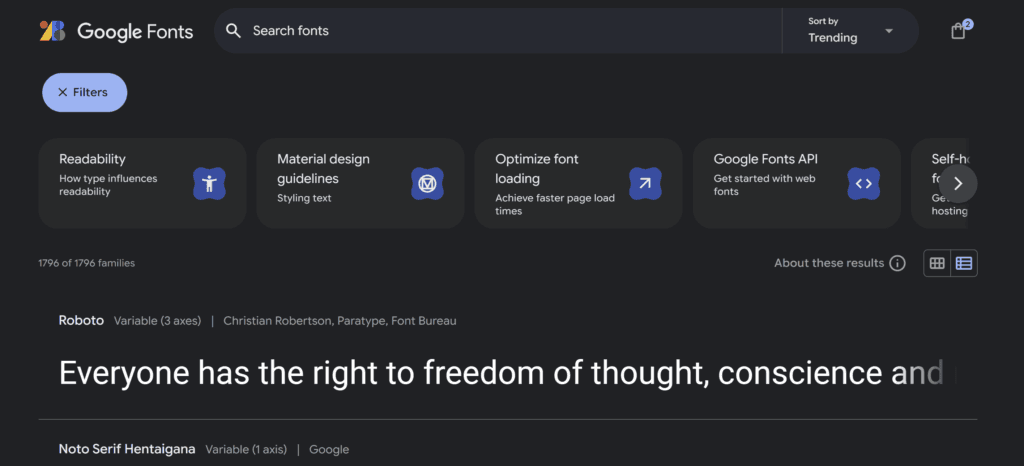
  • Use dependable web sources: Google Fonts and Adobe Fonts offer large catalogues with licensing suited to many web projects.
  • Prioritise mobile-friendly choices: Test paragraph size (~16px minimum for body is a common baseline) and tap targets near type-driven buttons.
  • Optimise line spacing: Comfortable line-height (often around 1.4–1.6 for body) improves comprehension.
  • Keep contrast high: Dark text on light backgrounds (or verified inverse pairs) remains the safest default for long reading.

Small typographic decisions stack into noticeably better engagement.

The power of typography in digital marketing

Typography supports every channel: site, ads, email, social templates. A coherent system reinforces recognition, improves readability, and makes campaigns feel like one brand, not a pile of one-off choices.

Whether you are designing a website, shipping creative, or refreshing brand identity, type should be decided early, not patched in at the end.

At Primed Pixels, we help teams lock typography into design systems that work for marketing and engineering. Need a second opinion on pairing, performance, or accessibility? Contact us and we will help you elevate your brand with typography that holds up in the real world.

Chris W

Written by

Chris W

Lead Web Developer

Web developer with over a decade of experience building strategic online solutions for businesses throughout the UK.

Work With Us

Frequently asked questions

How many fonts should a brand use on a website?

Most sites stay readable with one font family for body text and a second for headings, or a single variable font with multiple weights. Going beyond two or three families usually hurts consistency unless you have a strict design system.

Are serif fonts bad for websites?

No. Serifs can work beautifully for headings and editorial layouts. For long body copy on small screens, test legibility at real sizes; many brands pair a serif display with a neutral sans-serif for paragraphs.

What makes a font accessible?

Legible letterforms, sufficient size and line height, high contrast against the background, and avoiding all-caps blocks of body text. Always test with real content on phones and zoomed views.

Should I use a custom font or a system font?

Custom web fonts reinforce brand character but add weight and layout work. System font stacks load instantly and feel native. Many teams use a brand font for headings and a performant system or Google Font for body copy.

PreviousWhat's Difference Between Web Design and Web DevelopmentNextTop 10 Free AI Logo Generators Without Watermark (2026)